About
The long version
01/01
A little About Me
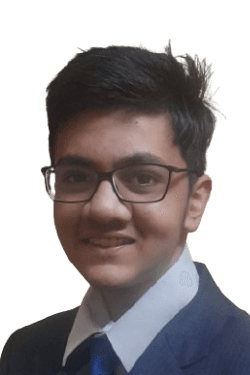
Hi I am Rishit Sinha,a final Year B.Tech Student in Artificial Intelligence & Data Science from Poornima University I''m a Full Stack Developer but I Had To Choose where I'm Strongest I'd Say Frontend and Product Engneering
I Enjoy Taking An Idea from a rough concept and Turning it into something that feels polished,fast,and actually usable.Most of my Work revolves around React,Next.js,Typescript,Javascript and modern frontend tooling while i'm comfortable going into the backend with Node.js,Express,Python,Databases,API's and deployment when the product needs it
Where I'm From
I'm from Jaipur Rajasthan,India My Journey into development Started less with a specfic carrer plan and more with curiosity I Wanted to understand how the website and applications.
The Curiosity eventually turned into building Things myself At First,They Were small experiments -things that broke constantly and were held together by questionable code
What I've Been Building
The first real turning point was building FinanCinno. Not because it was the most complex thing I'd built, but because it was the first time I shipped something people actually used. It taught me that a good product isn't about features — it's about clarity. The experience should feel calm, not crowded.
Then came my internships. At TheTastyMillets, I learned what production code looks like — the kind that has to work for real users, not just pass a demo. I built responsive UI components across 12+ pages and deep-dived into accessibility in ways no textbook had taught me.
At NextLearn Technologies, I went full-stack. I designed and deployed a learning application that cut page load time by 65%. But the bigger lesson was shipping 8 product features on schedule — learning to balance speed with quality under real constraints.
Each project after that — NoteMog, Flux, klryo — pushed me in a different direction. Real-time systems, collaborative tools, AI-assisted workflows. Each one reinforced the same idea: the best interfaces stay out of the way.
Where I am now
I'm a final-year CS student focused on backend systems and full-stack product work. My day-to-day involves building things that are meant to ship — not sit in a repo.
Right now I'm most interested in the space between infrastructure and user experience: how the backend shapes what the frontend can promise, and how small design decisions ripple into reliability, speed, and trust.
What drives me
I'm drawn to products that feel inevitable — the kind where every interaction makes sense on the first try. That means writing code that's boring in the best way: predictable, maintainable, and easy to hand off.
Going forward, I want to work on systems where the engineering is invisible to the user but obvious to the next developer who reads the code. I'm exploring distributed systems, developer tooling, and anything that makes building software feel less like a chore and more like a craft.
Outside the code
I'm Not Someone Who Spend every walking hour thinking about software I Like exploring new places ,following football experimenting with new ideas,and occasionally starting projects just because i wonderd "Could I Actually Build That?"
Where I'm Going
I'm Currently Finishing my Degree and Figuring out what comes next. I don't have my entire carrer mapped out and I Don't think I need to I'm Exploring Backend system ,distributed systems developer Tooling and the countless intresting problems that exist somewhere between " This Should be simple " and "why is this Taking three days to debug?"